Dear friends and colleagues,
What is development cooperation for?
We spend a great deal of time debating the financing, institutions, and instruments around development cooperation. We tend to spend significantly less time talking about what we want it to collectively achieve. Yet, without that shared understanding, it is difficult to judge whether cooperation is effectively delivering results—or what needs to change.
That is the starting point of our second report, Driving Change: Purposes and Principles for Effective Development Cooperation, just published on October 5. It sets out four enduring purposes for development cooperation: ending needless deprivation and protecting people in crisis; accelerating economic transformation; advancing the common good; and amplifying knowledge and innovation. Five operating principles address how cooperation must evolve to serve those purposes, beginning with countries’ own priorities and capabilities.
The conversations we have had over the past month—in Accra with our Commissioners and in New York during UN General Assembly High-Level Week/Climate Week—have reinforced the urgency of this work. Across different perspectives, I heard a persistent demand for cooperation that delivers, for moving forward following a period of uncertainty and crisis, and for greater accountability from everyone involved.
Country leadership and accountability must go together. Governments need to be accountable to their people for the choices they make. External partners need to be accountable for supporting agreed priorities and for the effects of their own financing, reporting, and delivery practices. All of us need to ask whether our work leaves countries with stronger institutions and the ability to sustain progress both at home and in addressing collective challenges and opportunities that cross borders.
Of course, principles alone will not change behavior. The report confronts why earlier commitments have so often fallen short: entrenched incentives, unequal influence, limited capability, and weak accountability. Our next and final report will translate this framework into specific, actionable recommendations.
As we head to the World Bank–IMF Annual Meetings in Bangkok, we will be testing our emerging recommendations with governments, parliamentarians, business leaders, civil society, and other partners. We want challenges as well as support.
Please read the report, share it with colleagues, and consider where its purposes and principles could inform your own decisions and partnerships. We would particularly welcome your thoughts on what would make them work in practice. That is the real work ahead – to be able to reflect honestly and without defensiveness about what each of us can do differently to infuse life and meaning into principles on paper. As my parents always said, “change starts at home.”
The challenges are considerable. But the willingness to engage, question established approaches, and work together gives me reason for optimism. Our task now is to gather our courage to turn that willingness into change.
Read and share Driving Change: Purposes and Principles for Effective Development Cooperation.
Warm regards,
Alexia

How should development cooperation change to deliver on its enduring purposes?
Published on October 5, the Coalition’s second report, Driving Change: Purposes and Principles for Effective Development Cooperation sets out four purposes and five operating principles:
Purposes:
- End needless deprivation; protect people in crisis.
- Accelerate economic transformation.
- Advance the common good.
- Amplify knowledge and innovation.
Principles:
- Rebalance the playing field.
- Embrace country-led accountability.
- Make capital work better.
- Measure and reduce risk.
- Address systems, not silos.
The Coalition’s three reports have a clear arc: progressing from countries’ realities, then moving to a shared sense of purposes and principles, and concluding with practical action and recommendations. The first report issued in May, The Development Balance Sheet: Rethinking Development Cooperation from the Ground Up, starts with countries’ own priorities, assets, and liabilities. This second report defines what cooperation should achieve and the principles that should guide it. The final report, scheduled for release later this year, will propose specific changes to the development cooperation landscape and identify the actors best placed to carry them forward.
Read the report.
Accra Meeting
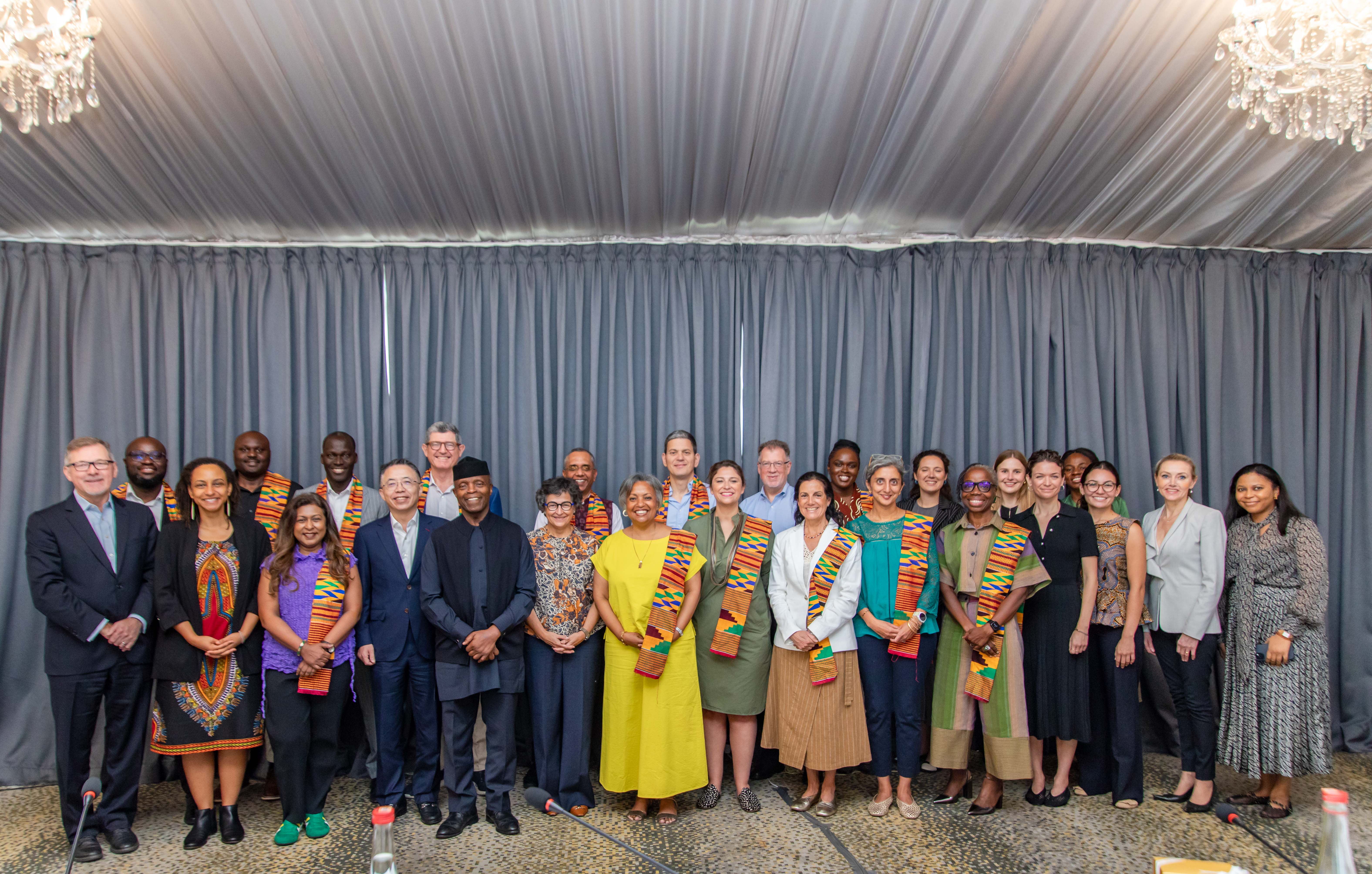
The Coalition’s Commissioners met in Accra on September 10–11, hosted by the African Center for Economic Transformation, to develop recommendations for the final report. Co-Chairs Yemi Osinbajo and Arancha González Laya put a clear challenge to the Commissioners: focus on a limited number of ambitious, practical recommendations with the greatest potential for impact. Each should address a pressing challenge, be feasible to finance and scale, and attract a coalition of actors able to put it into practice. We also discussed how to move from recommendations to implementation, planning ahead on connections to leaders, institutions, regional groupings and inter-governmental bodies, and countries that could form the coalition of the willing to take action.
Dr. Edem Adzogenu also joined us as a special dinner guest to discuss the Accra Reset, which released its report during UNGA.
You can read more about the Coalition’s meeting in Accra here.
And here is some coverage from this stretch of activity, including a story by the Ghana News Agency that covers issues including debt restructuring, affordable finance, domestic capital, and digital opportunity. Read the article.
And an interview Co-Chairs Yemi Osinbajo and Arancha González did with Bernard Avle on African agency in shaping economic institutions and rules, really worth a watch: here.
At UNGA: An Open Conversation on the Future of Internationalism
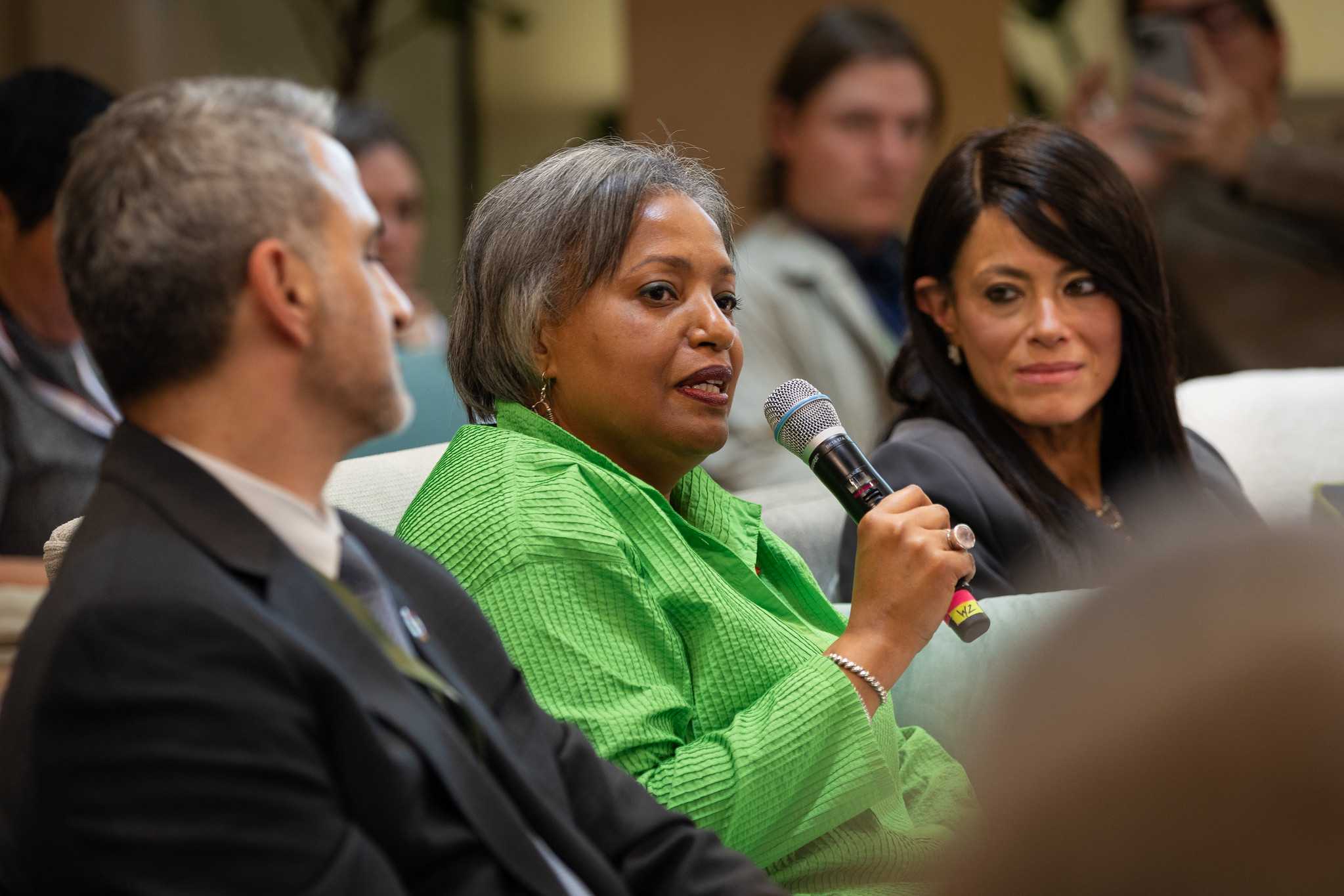
Co-organized with Project Everyone, The Observer, and the UN Office for Partnerships at the UN Goals Lounge, and moderated by The Observer’s James Harding, this editorial conference featured Alexia Latortue’s call for countries to help shape international institutions and rules, and Arancha González’s emphasis on the importance of delivering results, alongside candid and lively contributions from a fantastic lineup of leaders. LinkedIn readout, including the recording link. The Observer LinkedIn post and edited clip.
And a very nice piece from the Ford Foundation, ‘Rethinking Development Cooperation for a Multipolar World,’ explores the Coalition’s rationale and approach. Read the feature.
More From Our Consultations

If you missed it, the full writeup of the Coalition’s consultation in Beijing is now up on our website.
You can also read new sets of read outs from our thematic deep dive discussions on Building State Capacities, Addressing the Sovereign Debt Crisis, Artificial Intelligence and Development, Making Domestic Capital Work, and Development Cooperation in Fragile and Conflict-Affected Settings on our website.
Highlights Galore
As noted, September was a busy month, and here is a quick roundup of some of those highlights:
African leadership across UNGA. A roundup covering Unstoppable Africa, Accra Reset’s Full Circle gathering, the Okavango Circle launch, and Yemi Osinbajo’s contributions, emphasizing African institutions and leaders shaping their own development agendas. African leadership roundup · Accra Reset LinkedIn readout.
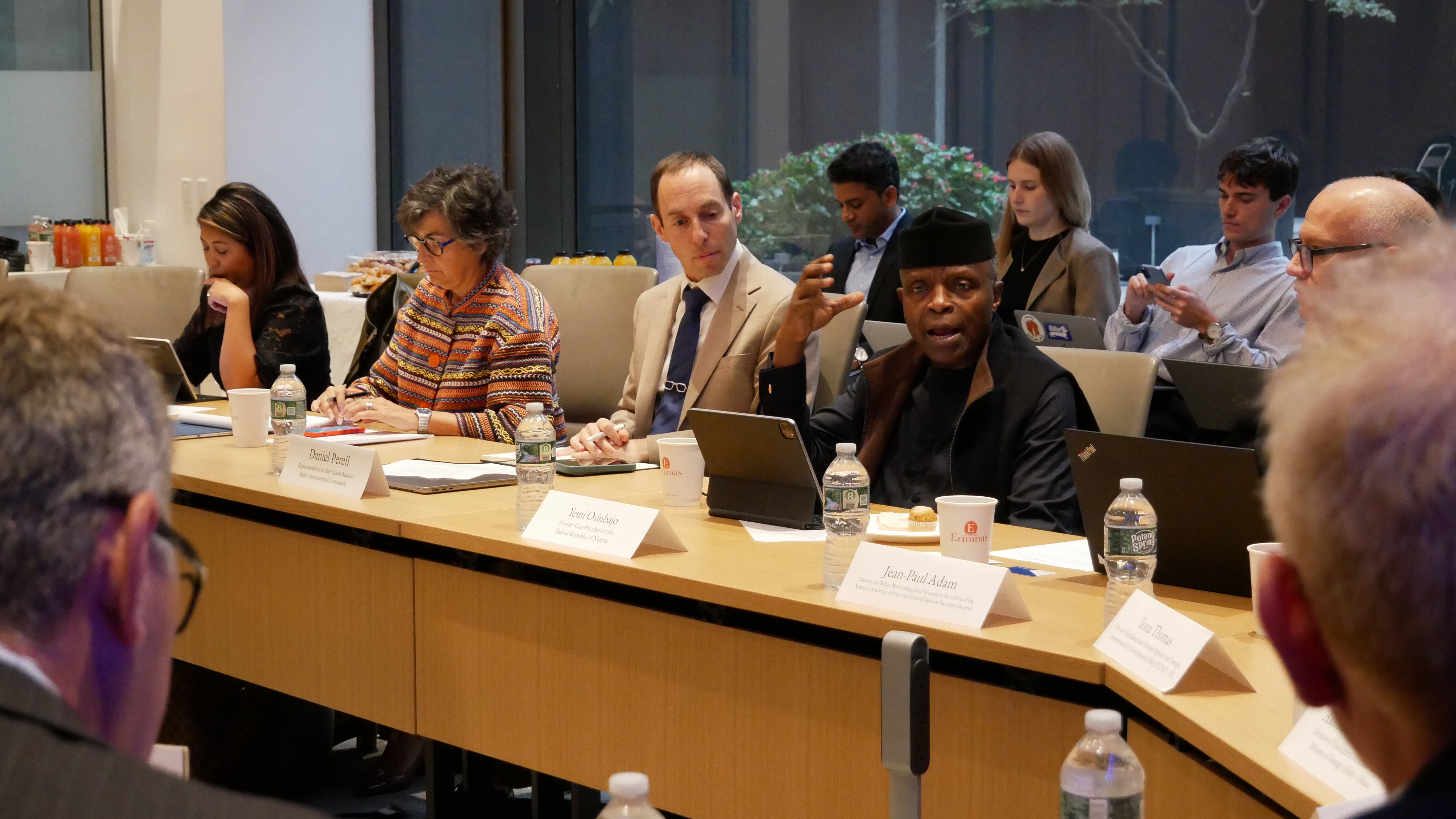
UNGA event: Renewing Multilateralism—Country-Led Priorities for a Changing Global System. Co-organized with the Africa-Europe Foundation and Article 109 Coalition, with both Co-Chairs Arancha González and Yemi Osinbajo and Alexia speaking. LinkedIn readout.
UNGA event: Investing in Development for Resilience, Stability, and Shared Prosperity. Co-organized with rani (the Resilience Action Network International), a breakfast roundtable at the Goals House, examining European aid and the case for development assistance that protects people, strengthens services and institutions, and supports shared security and prosperity. Arancha González and Commissioner David Miliband kicked off the conversation, attended by several of the Coalition’s supporting countries from Europe. LinkedIn post and photographs.

“New Constellations: Which Actors Will Shape the Next International Order?” Starling Institute’s UNGA event, co-hosted with the Global Fund for a New Economy, Cooperation Canada, and New America’s Power, People, and Planet Initiative, featured Alexia alongside a deeply thoughtful panel that delivered ‘provocations.’ LinkedIn post.
At UNGA, Alexia also participated in the Africa Finance Corporation’s “The Africa We Build” roundtable on regulation, risk, and reward; Alexia and Arancha González took part in the Africa-Europe Foundation’s Women Leaders Network breakfast; and Alexia joined UN Deputy Secretary-General Amina Mohammed’s Women Rise for All lunch as well as her roundtable on Sustainable Development in an Era of Flux. LinkedIn roundup.
Listen: Yemi Osinbajo with Michael Igoe on Theory of Change. The Coalition Co-Chair chats with Devex about what country ownership really means. Interview · Coalition LinkedIn post.
Listen: Alexia and the Coalition’s Director of Research Radha Rajkotia on VoxDevTalks. Alexia and Radha joined the VoxDev podcast to discuss ‘Rethinking development cooperation: The case for a ‘balance sheet’ approach,’ covering why cooperation should begin with countries’ assets, liabilities, and capabilities—and support their role as negotiators. Podcast and accompanying article · VoxDev LinkedIn post.
